
If you're a parent, you've probably heard those words at the end of a long school day, after Saturday sport, or at bedtime when you were hoping for a quiet evening. Most of the time it's nothing serious. But sore feet in kids are not something to simply brush off.
Children's feet are still growing, and small problems can turn into bigger ones if nobody notices them early. The good news is that most children's foot problems are easy to manage, and many can be prevented with a few simple habits.
In this guide, we walk through the six most common children's foot problems we see at Podhills Podiatry, what to look out for, and what you can do at home.
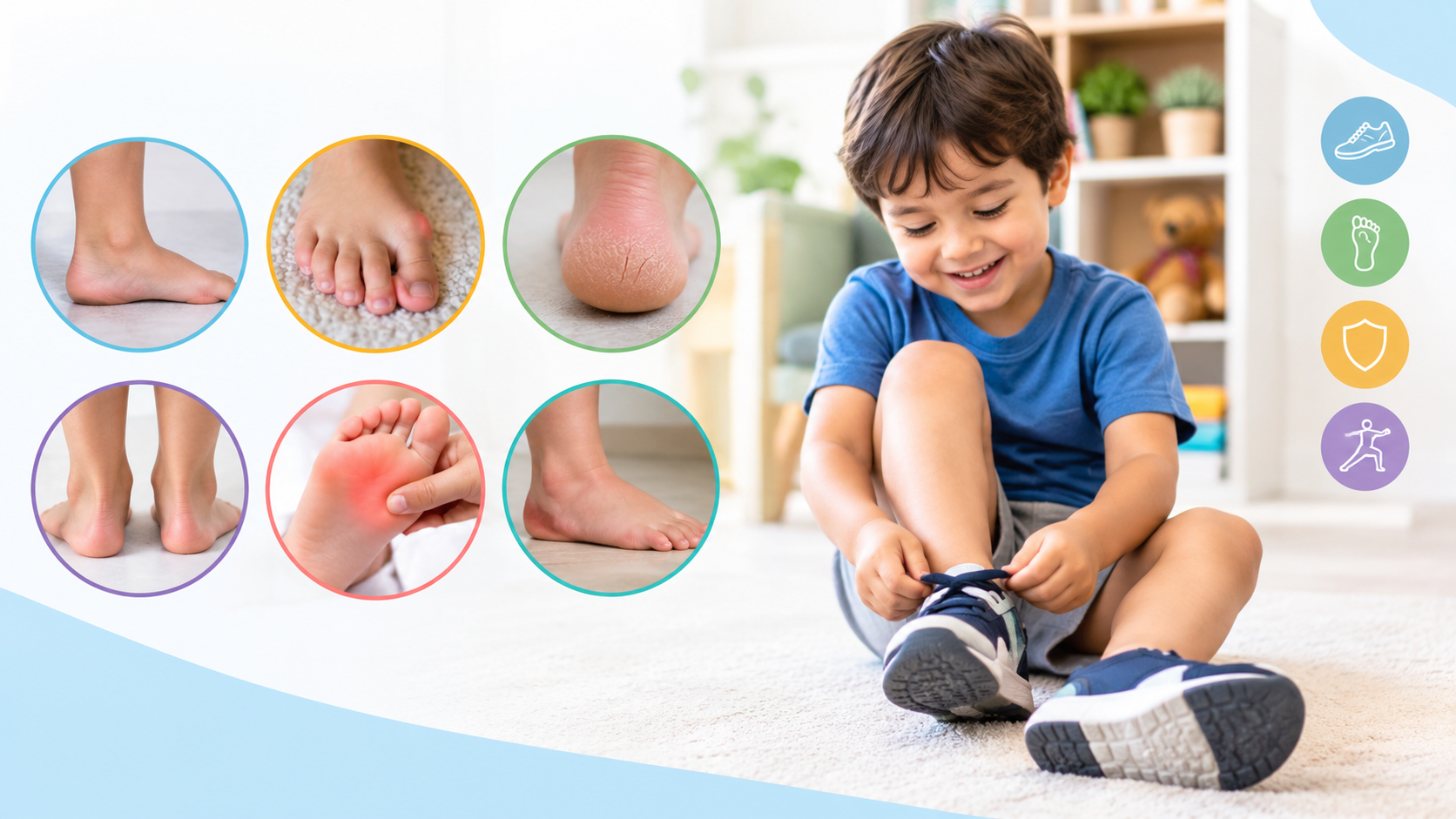
Why Children's Feet Need Extra Attention?
A baby's foot is mostly soft cartilage. It slowly turns into bone, and that process carries on right through childhood and into the teenage years. Because the foot is still changing, it's easily affected by tight shoes, heavy sport, family traits and the way a child walks or runs.
Think of it like teeth. You wouldn't wait for a cavity to become a big problem before booking a dentist visit. Feet deserve the same attention. Catching an issue early is usually quicker, easier and cheaper than fixing it later.
1. Flat Feet
What it is: The arch on the inside of the foot looks low or disappears when your child stands.
What you might notice: The ankles roll inwards, shoes wear down on the inside edge, or your child says their legs get tired quickly. Some kids complain of aching feet or arches after being active.
Here's something that surprises many parents: flat feet are very normal in toddlers and young children. Arches usually develop gradually over the first several years of life, and many children never have any trouble at all. It only becomes a concern when there's pain, clumsiness or tiredness that gets in the way of play.
How to help:
Let your child play barefoot at home, on grass and on sand. It helps the small muscles in the feet get stronger.
Choose shoes that hold the heel firmly and don't twist too easily.
Try fun foot games, like picking up toys or tea towels with the toes.
We've shared more in our guides on the best exercises for flat feet and the difference between flat feet and a high arch.
2. Sever's Disease (Heel Pain in Active Kids)
What it is: Despite the name, it isn't really a disease. It's irritation of the growth plate at the back of the heel, where the Achilles tendon pulls on a still-growing bone.
What you might notice: Pain at the back or sides of the heel, often after running, jumping or sport. Your child might limp, walk on tiptoes to avoid pressure, or sit out of games. It's most common between about 8 and 14 years old, especially in kids who play football, netball, basketball or run a lot.
The pain usually settles with rest and then comes back when activity starts again. It tends to ease as the growth plate matures, but your child doesn't have to just put up with it in the meantime.
How to help:
Cut back on high-impact activity for a short while, rather than stopping everything.
Gentle calf stretches after exercise can take pressure off the heel.
Make sure sports shoes are supportive and in good condition. Worn-out shoes make things worse.
Increase training slowly, especially at the start of a new season.
If the pain keeps returning, a podiatrist can check what's putting extra strain on the heel and suggest supports or other options.
3. Growing Pains
What it is: Aching in the legs that tends to show up in the evening or during the night, usually in children aged around 3 to 12.
What you might notice: The ache is typically in the calves, thighs or behind the knees, and often in both legs. Your child might wake up crying, but by morning they're running around as if nothing happened. There's no swelling, no redness and no limping.
How to help:
A gentle leg massage before bed
A warm bath
A little light stretching
Some comfort and cuddles. Kids often feel better just knowing someone is looking after them.
When it's not just growing pains: Pain in only one leg, pain that is there during the day, swelling, redness, a limp, or a child who seems unwell should always be checked. Real growing pains don't cause those things.
4. Ingrown Toenails
What it is: The edge of the nail grows into the skin beside it, causing a sore, red and sometimes swollen toe. The big toe is the most common spot.
What you might notice: Your child pulls their foot away when you touch the toe, avoids wearing certain shoes, or you spot redness or swelling along the side of the nail. If it becomes infected, there may be pus or warmth around the area.
How to help:
Cut toenails straight across, not curved and not too short.
Check that shoes and socks aren't squeezing the toes.
Do not let your child (or you) dig at the nail with scissors or tweezers. It usually makes things worse.
A warm foot soak can ease mild discomfort.
If the toe is red, swollen or leaking, it's best to book a visit. Our guide on what causes ingrown toenails explains more, and you can read about our toenail care too.
5. Plantar Warts (Verrucae)
What it is: A small, rough lump on the sole of the foot caused by a common virus. Kids tend to pick them up in places like swimming pools, school change rooms and communal showers.
What you might notice: A hard spot that looks a bit like a callus, sometimes with tiny black dots in the middle. They can be sore when your child walks or when you squeeze the sides of the spot.
Many warts clear up on their own, but it can take months or even longer. In the meantime, they can spread to other parts of the foot or to other family members.
How to help:
Ask your child to wear thongs or pool shoes in change rooms and around the pool.
Keep feet clean and dry, especially between the toes.
Cover a wart with a waterproof plaster when swimming.
Don't share towels, socks or shoes.
Avoid picking or scratching, which can spread the virus.
If a wart is painful, getting bigger, or multiplying, it's worth having it looked at.
6. Toe Walking and In-Toeing (Pigeon Toes)
These two are different, but parents often ask about them together.
Toe walking is when a child walks on the balls of their feet without the heels touching the ground. It's common in toddlers who've just started walking. If it's still happening after the age of about 2 to 3, or your child can't put their heels down when asked, it's worth getting checked.
In-toeing, or pigeon toes, is when the feet point inwards when walking or running. It's common in young children and often improves by itself as they grow. Kids with in-toeing may trip over their own feet more often or sit in a "W" position with their legs tucked back beside them.
How to help:
Encourage varied play, like running, climbing and playing on different surfaces.
Try to encourage sitting cross-legged instead of in the W position.
Keep an eye on whether things are improving with age.
See a podiatrist if your child trips often, complains of pain, looks very uncoordinated compared to other kids, or the pattern isn't improving.
Simple Daily Habits That Protect Little Feet
A few easy routines make a big difference:
Check shoe size regularly. Little feet can outgrow shoes in a few months. There should be about a thumb's width of space in front of the longest toe.
Pick shoes with a firm heel and a bit of support. The shoe should bend where the toes bend, not in the middle.
Skip the hand-me-downs. Shoes mould to the wearer's foot, so a pair that fitted an older sibling may not suit a younger one.
Go easy on thongs. They're fine for the beach or pool, but not for long walks, school days or sport.
Keep nails trimmed straight across.
Dry feet well after swimming. This is especially important between the toes.
Let them go barefoot sometimes. At home or on soft, safe ground, it's good for foot strength.
Replace worn sports shoes. Once the cushioning is flat or the sides are collapsing, they aren't doing their job.
When Should You See a Children's Podiatrist?
You know your child best. If something doesn't look or feel right, trust your instinct. As a general guide, it's a good idea to book a check if your child has:
Foot, heel or leg pain that keeps coming back or doesn't settle
A limp that lasts more than a few days
Shoes that wear down unevenly
One foot that looks different to the other
Frequent tripping or falling
A wart, toenail problem or skin issue that isn't improving
You don't need a referral to see a podiatrist. You can book straight in.
How Podhills Podiatry Can Help?
At our Baulkham Hills clinic, we look after children's feet in a calm and friendly way. We'll watch how your child walks, check their footwear, and explain things in plain language so you know exactly what's going on. If your child needs extra support, we can talk through options such as orthotics.
You can read more about our children's podiatry service on our website.
Final Thoughts
Foot pain isn't something children should simply learn to live with. Most common problems are easy to manage when they're caught early, and a few healthy habits go a long way.
If your child has sore feet or you're just not sure whether something is normal, we're here to help. Call us on (02) 8897 4220 or book an appointment online. Our clinic is at The Hills Private Hospital, 3b/497-499 Windsor Rd, Baulkham Hills.
This article offers general information only and isn't a substitute for personal medical advice.
FAQ’s
-
There's no fixed age. A check before starting school is a great idea, and earlier is fine if you have any concerns about how your child walks or if foot problems run in the family.
-
Yes. Most toddlers have flat-looking feet, and arches usually develop gradually. It's only a concern if your child has pain, tires quickly or has trouble keeping up with other kids.
-
No. You can book directly with us online or by phone.
-
Yes, they can. Foot shape, flat feet and the way a child walks are often inherited. If you or your partner had foot problems growing up, it's a good reason to have your child's feet checked early.
-
It's relaxed and child-friendly. We'll chat with you and your child about any concerns, look at their feet and legs, watch them walk, and check their shoes. Then we'll explain what we found in plain language and talk through the next steps, which are often simple.