
What Are the Best Exercises for Flat Feet?
Flat feet — also known as “fallen arches” — are more common than many people realise. Some people are born with a low arch, while others develop flat feet later in life due to posture changes, injuries, muscle weakness, or spending long hours on their feet. Whether flat feet cause discomfort often depends on how well the surrounding muscles are supporting the arch.
The good news is that the best exercises for flat feet can help improve strength, stability, and comfort. Just like any other part of your body, the feet respond well to targeted training. When done consistently, exercises for flat feet can strengthen the muscles that support the arch, reduce over-pronation, improve walking patterns, and ease strain on the ankles, knees, and even the lower back.
Below, we explore a range of flat feet exercises that support healthy foot mechanics and may improve how the arch functions over time.
Why Do Flat Feet Develop?
Flat feet can develop for different reasons, and not everyone with flat feet experiences pain or discomfort. In many cases, fallen arches are caused by a combination of natural foot structure, muscle strength, and daily lifestyle factors.
Some people are born with low or flexible arches, meaning the foot naturally flattens when weight is placed on it. Others develop flat feet over time as the muscles and tendons that support the arch become weaker or overstretched.
Common causes of flat feet include:
Genetics: Some people inherit naturally low arches, which may remain symptom-free unless the foot is placed under repeated strain.
Muscle weakness: The small stabilising muscles inside the foot help support the arch. When these muscles are weak, the arch may collapse during standing or walking.
Injuries or tendon strain: Damage to supporting structures — particularly the posterior tibial tendon — can reduce the foot’s ability to maintain its arch.
Posture and walking patterns: Over-pronation, where the foot rolls inward excessively, places ongoing stress on the arch and surrounding joints.
Long hours on your feet: Prolonged standing or walking on hard surfaces can fatigue foot muscles and gradually reduce arch support.
Age-related changes: As we age, tendons and ligaments lose strength and elasticity, which can cause the arch to lower over time.
Understanding why flat feet develop helps explain why exercises for flat feet are so important. When muscle weakness and poor control are contributing factors, strengthening and stability exercises can play a key role in improving comfort and supporting healthier foot mechanics.
Why Exercises Matter for Flat Feet
The arch of the foot works like a spring, helping absorb shock and support body weight during walking and running. When the arch collapses or flattens, the feet can become less efficient, leading to fatigue, instability, and discomfort.
Muscles in the foot and lower leg play a key role in arch support. When these muscles are weak, flat feet may become more symptomatic. This is why exercises for flat feet are an important part of conservative treatment.
Strengthening those deep foot muscles can:
Improve balance and stability
Support better alignment of the knees and hips
Reduce fatigue and discomfort during walking or sport
Encourage more efficient weight distribution across the foot
A growing body of physical therapy research suggests that exercises targeting the intrinsic foot muscles — the tiny muscles within the foot — may help maintain or improve arch height in people with flexible flat feet. Improvements usually happen gradually, but many people notice changes in comfort within weeks when they stay consistent.
Best Exercises for Flat Feet
Below are some of the best exercises for flat feet that podiatrists commonly recommend to support arch strength and foot stability.
1. Arch Lifts (or “Doming”)
This exercise teaches your foot muscles to activate the arch on demand.
How to do it:
Sit or stand with both feet flat. Keeping your toes and heel planted, gently draw up the middle of your foot to form a small arch. Hold, then relax.
Why it helps:
One of the most effective flat feet exercises for Building strength and control in the muscles responsible for arch support.
2. Calf Raises
A strong calf helps support the rear of the arch and improves ankle stability.
How to do it:
Stand with feet hip-width apart. Slowly lift onto the balls of your feet, pause, then lower down.
Tip:
Start with both feet, progress to single-leg for more challenge.
3. Towel Scrunches
A simple move that targets the tiny muscles under your foot.
How to do it:
Place a towel under your feet while seated. Curl your toes to scrunch the towel toward you, then release.
Why it helps:
A classic example of exercises for flat feet that Improves toe strength and arch control during movement.
4. Marble Pick-Ups
A fun coordination exercise that teaches your toes to stabilise the arch.
How to do it:
Set out a few marbles (or small objects). Pick them up using your toes, one by one.
5. Heel and Toe Walking
Helps strengthen the front and back of the lower leg, improving dynamic arch support.
How to do it:
Walk on your toes for 10–20 steps, then on your heels for the same distance. Repeat 2–3 rounds.
6. Balance Training
Flat feet often come with reduced ankle stability — balance training targets this directly.
Try:
Standing on one leg for 20–30 seconds. Progress to uneven surfaces (like a pillow) or do gentle arm movements while balancing.
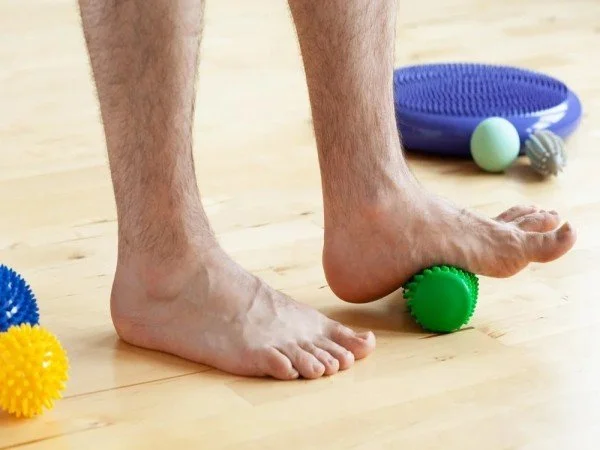
7. Foot Rolling (Massage)
Not all flat feet exercises involve strengthening, muscle tension also contributes to discomfort.
How to do it:
Roll a tennis or massage ball under the arch for a few minutes to release tight tissues and improve mobility.
What to Expect – and Be Patient!
Like any fitness routine, consistency is key. Most people benefit from:
Perform exercises for flat feet 3–4 times per week
Starting slow and building gradually
Combining exercises with supportive footwear
Checking in with a podiatrist if pain persists
Some flat feet are structural and won’t completely change shape — and that’s perfectly normal. The aim of the best exercises for flat feet is not to create a “perfect” arch, but to improve comfort, movement, and long-term foot health.
Short Conclusion
With the right flat feet exercises, many people can strengthen their arches, improve balance, and move more comfortably day to day. Even small gains in foot strength can positively affect the ankles, knees, hips, and lower back.
Support for Healthy Feet in Sydney
At Podhills Podiatry, our Sydney team provides professional assessment for flat feet and creates personalised treatment plans that may include targeted exercises, footwear advice, and custom orthotics when needed. We focus on practical, long-term solutions to keep you active and pain-free.
Book an appointment today and let Podhills Podiatry support your journey towards stronger, healthier feet — right here in Sydney.
FAQs
-
The best exercises for flat feet at home include arch lifts (doming), towel scrunches, calf raises, balance training, and heel-to-toe walking. These exercises strengthen the muscles that support the arch and improve foot stability. They don’t require special equipment and can be done in short daily sessions. Staying consistent with these flat feet exercises can help reduce discomfort and improve walking comfort over time.
-
Yes, exercises for flat feet can help improve arch support, particularly in people with flexible flat feet. Strengthening the intrinsic foot muscles allows the arch to function more efficiently during movement. While exercises may not permanently change foot structure in everyone, they often improve strength, balance, and comfort, which can significantly reduce symptoms associated with flat feet.
-
Most people benefit from doing flat feet exercises three to four times per week. Some notice reduced foot fatigue or improved stability within a few weeks, while structural improvements take longer. Consistency is more important than intensity. Combining exercises with supportive footwear or orthotics, as advised by a podiatrist, can improve results.
-
You should see a podiatrist if flat feet exercises do not reduce pain, or if you experience ongoing foot, ankle, knee, or lower back discomfort. A podiatrist can assess your foot mechanics, identify contributing factors such as over-pronation, and recommend a personalised treatment plan. This may include specific exercises, footwear advice, or custom orthotics for better long-term support.